Are you considering updating your home but need help knowing where to start? A great starting point is examining how well your house currently insulates.
Poor insulation can lead to increased energy bills and an uncomfortable environment, so many homeowners are now choosing spray foam insulation as a more effective means of providing adequate protection against heat loss or gain.
In this article, we’ll be walking through the basics of spray foam insulation, its advantages for homes and buildings, and the various types available so that you can make an informed decision when it comes time to insulate your abode!
Once you have finished our latest article, if you are interested in learning more about spray foam insulation or want more information, all you need to do is pick up the phone and speak to our team today; we are always more than happy to help.
Pros And Cons Of Spray Foam Insulation
Spray foam insulation is a popular method used in residential and commercial buildings. It involves spraying a mixture of chemicals onto the surfaces that need insulation, which then expands and solidifies to create a barrier against heat transfer. Here are some pros and cons of spray foam insulation:
Pros:
Energy efficiency: Spray foam insulation can provide excellent insulation properties, reducing the energy needed to heat or cool a building.
Air-tight seal: Spray foam insulation can create a tight seal against air leaks, helping to reduce drafts and improve indoor air quality.
Durable: Spray foam insulation is durable and long-lasting and can help protect a building from moisture, mould, and other types of damage.
Versatile: Spray foam insulation can be used in various building applications, including walls, roofs, and attics.
Cons:
Cost: Spray foam insulation can be more expensive than other types of insulation, such as fibreglass or cellulose.
Professional installation required: A professional must install spray foam insulation, as it requires specialised equipment and training.
Health risks: Spray foam insulation can release harmful chemicals during installation, which can cause respiratory problems if proper safety measures are not taken.
Difficult to remove: Once installed, spray foam insulation can be challenging to remove or replace if needed.
Spray foam insulation can provide excellent insulation properties and a tight seal against air leaks, but it may not suit all buildings or budgets. It is essential to consider the pros and cons carefully and consult a professional before deciding on the best insulation method for your building.

What Exactly Is Spray Foam Insulation?
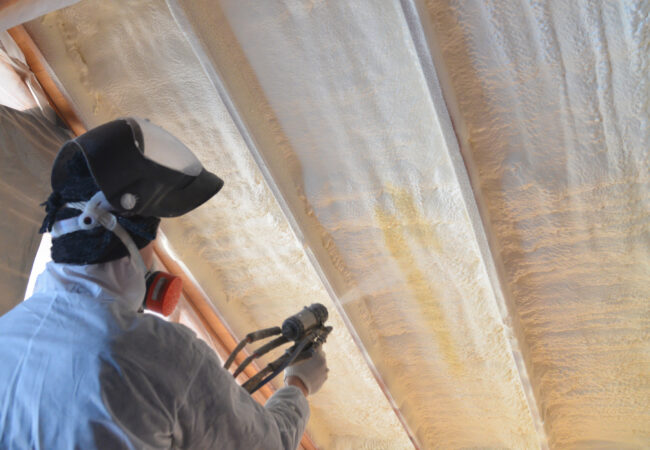
Spray foam insulation is an insulation material applied using a spray gun. It is made of two chemical components, polyol resin and isocyanate, mixed as they are sprayed onto surfaces such as walls, floors, and ceilings. The mixture then expands and hardens, creating a thick layer of foam insulation.
Spray foam insulation is popular because it provides excellent insulation properties and creates an air-tight seal, helping to reduce energy costs and improve indoor air quality. It can be used in various applications, including walls, roofs, attics, and crawl spaces.
A professional must install spray foam insulation, requiring specialised equipment and training. During installation, it is essential to take proper safety measures, as the chemicals used can release harmful vapours.
However, once installed, spray foam insulation is durable and long-lasting, providing excellent insulation and protection against moisture, mould, and other types of damage.
What Are The Different Types Of Spray Foam?
There are two main types of spray foam insulation: open-cell and closed-cell foam.
Open-cell foam: Open-cell foam is a lighter and less dense insulation material. It has a spongy texture that can expand to around 100 times its original volume, allowing it to fill small cracks and gaps. Open-cell foam has a lower R-value than closed-cell foam, providing less insulation per inch. However, it is more cost-effective and can be used in many applications.
Closed-cell foam: Closed-cell foam is a denser and more rigid insulation material. It has a higher R-value than open-cell foam, providing better insulation per inch. Closed-cell foam is also resistant to moisture and can help strengthen a building’s structure. However, it is more expensive than open-cell foam and requires more installation skill and experience.
Both types of spray foam insulation are applied using a two-part system: a mixture of isocyanate and polyol resin sprayed onto surfaces as a liquid and then expanded to create a foam.
The difference between open-cell and closed-cell foam lies in the size of the bubbles in the foam and the density of the material. The choice between the two types of spray foam insulation depends on factors such as the building’s location, climate, and the intended use of the insulated space.

Is Every Home Suitable For Spray Foam Insulation?
While spray foam insulation can be effective for many homes, it may only suit some. There are several factors to consider when deciding if spray foam insulation is suitable for a particular home, including:
Budget: Spray foam insulation is generally more expensive than other materials, such as fibreglass or cellulose.
Building design: The design of the building, including the type of construction, age, and condition of the home, can affect whether spray foam insulation is suitable.
Climate: The climate of the area where the home is located can affect the type of insulation best suited for the home.
Ventilation: Proper ventilation is essential when using spray foam insulation to prevent moisture buildup and ensure indoor air quality.
Health concerns: Spray foam insulation can release harmful chemicals during installation, so it is essential to take proper safety measures and consider any health concerns of the occupants.
It is essential to consult with a professional insulation contractor to determine if spray foam insulation is suitable for a particular home. A professional can assess the home’s needs and recommend the best insulation solution.
Spray foam insulation can also be used in commercial and agricultural buildings as well as within your home!
Is Spray Insulation Safe?
Spray foam insulation is generally safe when appropriately installed and appropriate safety measures are taken. However, during installation, the chemicals used to create the foam can release harmful vapours, which can cause respiratory problems and other health issues if inhaled.
It is essential to take proper safety measures when installing spray foam insulation, including wearing protective clothing, gloves, and a respirator. The insulated area should be well-ventilated, and occupants should stay away from the area until the installation is complete and the foam has fully cured.
Once the foam has fully cured, it is generally considered safe. It can provide a barrier against moisture and mould, improve indoor air quality, and reduce energy costs. However, if the foam is damaged or deteriorating, it can release harmful chemicals into the air, so regularly inspecting and maintaining the insulation is essential.
Spray foam insulation can be a safe and effective solution when appropriately installed and appropriate safety measures are taken during installation. It is essential to consult with a professional insulation contractor and follow all safety guidelines to ensure a safe and successful installation.


Will Spray Foam Insulation Increase The Value Of My House?
Installing spray foam insulation in your home can increase its value, but the extent of the increase will depend on several factors.
First, the location of your home can play a role in determining the value increase. In areas with extreme temperatures, such as very hot or cold climates, spray foam insulation can be especially beneficial in improving energy efficiency and increasing the home’s overall value.
Second, the age and condition of your home can also play a role in determining the value increase. If your home is older and has outdated insulation, installing modern and energy-efficient spray foam insulation can be a significant selling point for potential buyers.
Finally, the spray foam insulation installation cost compared to the potential energy savings can also impact the overall value increase. If the installation cost is relatively low compared to the energy savings, it can be a significant selling point for potential buyers and increase the home’s value.
Learn More About Spray Foam Insulation By Contacting One Insulation Today!
From the inside of your attic to the walls of your home, spray foam insulation is an excellent choice for keeping the air in and noise out. Spray foam will be more effective than traditional insulation and have long-term cost savings benefits due to its superior energy efficiency.
Plus, with spray foam, you can guarantee that each part of your house is sealed and enjoy a quiet home for many years. For anyone who wants the ultimate protection from outside temperature and sound, spray foam insulation is a must-have!
So don’t delay – contact One Insulation today and improve your home’s insulation system. Ensure you have the best-personalised solution for your home’s needs so you can sleep soundly, knowing your investment in spray foam insulation will maintain its value over time.
Spend less time worrying about the performance of traditional solutions and enjoy the peace of mind that comes from having superior protection!